
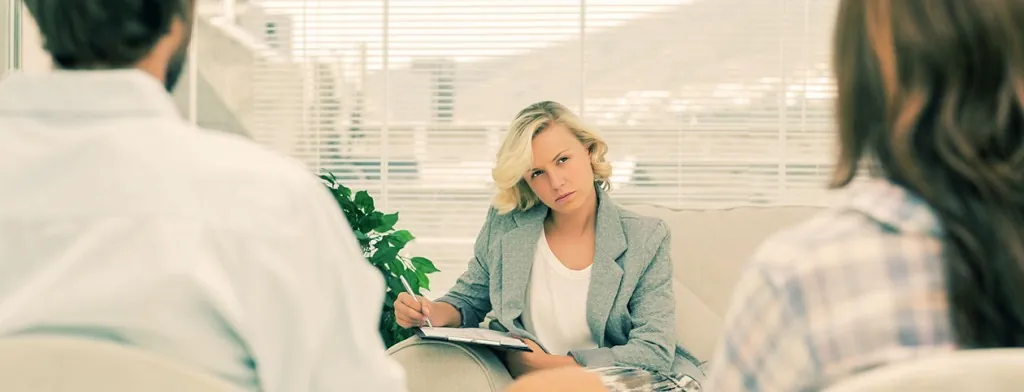
We found 9 Couples Counseling Techniques that are proven to work. Based on your specific needs, choose one of these successful couples counseling techniques.
Conflict is a part of relationships. It’s simply that since no two people are exactly the same, you won’t see the world the same way. That’s why there are many, many different couples counseling techniques.
Couples’ counseling is an important tool if those conflicts are starting to jeopardize the relationship as a whole. An occasional argument is probably healthy, but if it’s all the time, it’s a source of stress and unhappiness.
Conflict cannot always be avoided in relationships because no two people are exactly alike, so learning how to deal with conflict ensures a successful and healthy union. Relationship challenges arise in different ways, and being able to communicate with your partner is an integral part of a healthy relationship. Functional communication leads to better understanding between you and your partner, and understanding is the key to a successful union. An introduction to the different forms of therapy will guide your decision on which type of marriage counseling best suits your needs.
Nine techniques at a glance
| Technique | What the work explores |
|---|---|
| Gottman Method | Patterns of friendship and conflict |
| Narrative therapy | The stories partners tell about their relationship |
| Emotionally focused couples therapy | Emotions, attachment, and recurring interaction cycles |
| Positive psychology | Strengths, positive experiences, and appreciation |
| Imago relationship therapy | Structured dialogue and each partner’s experience |
| Communication analysis | Listening, expression, and conflict habits |
| Exploring unconscious roots | Earlier experiences and present relationship patterns |
| Intimacy work | Closeness, connection, and shared time |
| Individual counseling | Personal work alongside relationship concerns |
1. Gottman Method
Gottman Method Couples Therapy has the benefit of three decades of research and practice in clinical settings with more than three thousand couples. The Gottman Method uses couples counseling techniques to increase affection, closeness, and respect. These techniques help you resolve conflict when you feel like you’re at an impasse. You and your partner learn to understand one another and to discuss problems calmly.
The Gottman Method of couples counseling shows you how to build love maps, which help you learn about your partner’s psychological world by mapping your partner’s worries, stresses, joys, hopes, and history. Fondness and admiration are strengthened by expressing respect and appreciation for each other. This is a method of couples therapy that allows you to state your needs, and it stresses conflict management rather than conflict resolution.You and your partner learn to speak honestly about your aspirations and convictions. Trust and commitment to a lifelong relationship are reinforced.
Ask a prospective therapist
Which pattern would you help us change first, and how would we practice between sessions?
2. Narrative Therapy
One of the couples counseling techniquess, narrative therapy, seeks to separate the problem from the person by externalizing issues of concern. A therapist will ask you to describe your problems in narrative form, and then help you to rewrite the negative parts of the story. By acknowledging a problem doesn’t define a person but is something a person has, you gain a new perspective on the situation.
Narrative therapy helps you view your problem from different angles: culturally, politically, and socially. By stating negative issues in the narrative form, you become the dynamic in the story. The dynamic has the ability to change the story. Narrative therapy allows you to explore the past to bring to light negativities that otherwise remain hidden.
By exploring conceptions and behaviors, you gain insight into facts that have been troubling you and your partner. Thus, you find new ways to deal with your problems, effectively rewriting the narrative of your relationship.
Ask a prospective therapist
How would you help us describe a recurring problem without defining either partner by it?
3. Emotionally Focused Couples Therapy
Emotionally focused therapy was developed by Dr. Susan Johnson. This type of marriage counseling was first developed for couples, but it has proven useful for family counseling as well. Dr. Johnson’s method is used worldwide in hospitals, clinics, private practices, and training centers. Although emotionally focused therapy is helpful in most situations, it especially should be considered if depression is a suspected culprit of relationship woes.
Typically a short-term approach, emotionally focused therapy has three main goals. It encourages the expansion and reorganization of key emotional responses. It seeks to secure a tight bond between you and your partner. The therapy repositions each partner’s stance during interactions and creates new, beneficial interactions in your partnership. Emotionally focused therapy has been found to move 70 to 75% of relationships from a troubled state to a state of recovery. Significant improvement has been realized for 90% of couples using this therapy.
Ask a prospective therapist
How would you help us notice and interrupt our pursue-and-withdraw cycle?
4. Positive Psychology
Positive psychology emphasizes positive emotions, character strengths, and constructive institutions to promote the notion that happiness is derived from various mental and emotional factors. Positive psychology helps you identify happy moments as they happen rather than notice those moments in retrospect. Through this type of therapy, you learn to focus on positive emotions and to live in the present moment.
Many couples find positive psychology liberating and joyful. Specialists believe perception dictates happiness from one event to another. Some people can’t identify emotions as they arise but can see them clearly in hindsight. One technique uses beepers or pagers. The therapist beeps clients to remind them to record the experiences the clients are currently having.
Clients expand upon these entries in a journal detailing the previous day. This practice conditions you to enjoy moments as they are experienced.
Ask a prospective therapist
How can we build on what is working while still addressing difficult subjects?
5. Imago Relationship Therapy
Imago Relationship Therapy combines spiritual and behavioral couples counseling techniques with western psychological techniques of therapy to expose unconscious components that help you choose your mate. In this way, you and your partner are equipped to relate to each other in positive, caring ways. The therapist views the couple’s conflict as a solution to the situation rather than the problem. Examination of the conflict is the key to finding a solution to disharmony.
Emotional discord in a relationship is often expressed as dissatisfaction, criticism, or anger. This forces you to seek comfort from people outside your relationship. Imago Relationship Therapy examines the root of negative emotions and behaviors to find the cause of severed communication between you and your partner. Acknowledgment that each partner is communicating differently helps resolves problems. Partners learn that disagreements aren’t signs of love loss but are normal occurrences in relationships that can be resolved through communication.
Ask a prospective therapist
How would you guide a dialogue when we remember the same event differently?
6. Analyzing the Ways You Communicate
The inability to communicate in healthy ways is the basis for the majority of problems in a relationship. Conflicts are bound to arise in partnerships, but by learning to communicate your positions clearly, you can turn conflict into a constructive discussion. Communication is a skill that requires conscious effort. What may seem clear to you may not always be fully understood by your partner. It’s important for you to speak your mind rather than to expect one another to read moods and body language, which are open to misinterpretation.
Analysis of the methods you and your partner use to communicate offers insight into misinterpretation. A therapist can guide you toward functional forms of communication that alleviate misunderstandings. Learning new ways to communicate can seem unnatural at first but will help you and your partner to support and nurture each other.
Ask a prospective therapist
What would a more useful version of one of our usual arguments sound like?
7. Exploring Unconscious Roots of Problems
Some couples counseling techniques take a psychodynamic approach to therapy. The purpose is to bring the unconscious roots of a problem to the surface, whether the problem belongs to one or both partners. This form of couples counseling is most useful when irrational patterns of reacting exist. The belief of a psychodynamic counselor is that significant life events and childhood experiences shape peoples’ behavioral tendencies.
Such experiences may create an unfulfilled need or a distorted view of reality that leads to dysfunctional behavior. Insight into these events serves to change perceptions, and functional patterns of behavior are realized.
Situations, such as childhood abuse or an unfaithful parent, can lead to unreasonable expectations in a relationship. Unreasonable expectations sometimes cause irrational distrust or jealousy. During couples counseling, the therapist explores major past experiences in order to change distorted perceptions and eliminate irrational reactions to current events.
Ask a prospective therapist
How would insight into past experiences translate into a change we can practice now?
8. Enhancing Intimacy to Promote Closeness
Couples therapy is helpful regardless of whether problems exist in your relationship. Couples therapy isn’t just limited to deflecting or solving problems; it also promotes closeness and intimacy in a partnership. Counselors help couples enrich their lives by aiding the development of friendship and ways to show affection. By providing exercises to increase mutual support, therapists teach couples how to overcome existing issues and how to make relationships resilient. Learning how to tackle challenges without the aid of therapy is as important as overcoming any problems you are experiencing presently.
Seeking counseling that encourages intimacy is helpful for couples having difficulties in a relationship. Undergoing this type of counseling before making a major commitment is beneficial to the future of your relationship. Some couples find this sort of therapy helpful in an existing relationship that is devoid of problems.
Ask a prospective therapist
How would you help us discuss different preferences and comfort levels without pressure?
9. Individual Counseling
Individual counseling is recommended when one partner is unwilling to undergo therapy or as a precursor to couples therapy. If both partners are not able to seek help with methods of communication, couples counseling can be ineffective. A common issue with individual therapy arises with the client’s right to privacy. Some therapists insist their clients waive their rights to privacy before the therapist will work with partners individually.
The best outcome can be expected when both partners are committed to counseling, even if they aren’t firmly committed to the relationship. For a counselor to have a good idea of what is causing conflict, each partner should attend sessions together or separately.
Ask a prospective therapist
How would individual sessions fit with couples work, and what are the confidentiality arrangements?
Self-Counseling: Can It Work?
If your marriage has reached the point where you think you need counseling, it might not be a great idea to try to do it alone. Choosing the right couples counseling techniques above can make it easier to succeed.
There are, however, some things that you can do to improve your relationship is you feel it starting to slip.
One resource is a marriage encounter. The World Wide Marriage Encounter (WWME) program is a faith-based program that has been around for years. It provides groups of couples with opportunities to learn more about each other, to make friends, and to spend some time as a couple, growing together. They can be found on the web at http://www.wwme.org/.
In recent years, there have been many different books and journals written that are designed to help a couple improve their relationship. One of the most popular, also faith-based, was the book, movie and self-help program Fireproof. It was specifically designed for men to be able to increase their understanding of their partners in the context of their masculinity. While it might not be for everyone, millions of people swear by it.
Some of the other ways to save your marriage are really about making a mental switch to valuing your marriage first:
- Remember to take date nights – Time alone, without the pressures of work and children, is one of the most important ways to bond.
- Make your marriage first – Look at what each of you is doing that is pushing your marriage to the back burner.
- Talk – Not about ‘things’, but about your feelings. Sitting face-to-face without the TV on or kids running around is vital.
- Look for the good – We often focus on the bad that our partner has done, but try to consciously focus on the good that they do every day.
- Take a vacation – Go away. Even a week of being away from work and life is important. I can change everything for you both.
The most important thing to remember is that, like so much else in life, admitting you have a problem and committing to fixing it is the key to success.
Learn more about how to avoid divorce in our Marriage Counseling Guide.