

Marriage retreats enable couples time away from everyday routines to help rejuvenate their relationship as a married couple. In a recent research article in Psychotherapy it is noted that significant improvement in relationship satisfaction can result from couples therapy, evidencing that retreats may be beneficial for couples in any stage of marriage, whether they are on the brink of divorce or preparing for marriage.
1. Marriage Quest
Verified- Location
- St. Johnsbury, Vermont
- Format
- Private retreat for one couple, lasting 2–4 days
- Phone
- 802-212-3123
- Cost
- Three days: $7,200 per couple; four days: $9,200 per couple. Accommodation is arranged separately.
Marriage Quest offers private marriage retreats in St. Johnsbury, Vermont, led by Dr. David Helfand, a licensed psychologist who specializes in intensive couples counseling. He now runs the practice following the retirement of its founders, Dr. Israel Helfand and Cathie Helfand. The retreats are nonreligious and work with one couple at a time, allowing the sessions to focus on that couple’s relationship and goals.
Programs last two to four days, with three or four days recommended for couples in crisis. They address concerns such as communication difficulties, infidelity, emotional distance, and sexual intimacy, and can also help couples decide whether to stay together or separate. Rather than following a group curriculum, couples work directly with Dr. Helfand to understand recurring patterns and practice different ways of responding to each other. Sessions usually run from 9 a.m. to 1 p.m., with a shorter final day, leaving the afternoon and evening for reflection, practice, and time together.
Before the retreat, each partner completes a relationship questionnaire and receives access to an online couples course. Couples arrange their own accommodation and are encouraged to arrive the day before their first session. The program includes a personalized aftercare plan, two follow-up sessions with Dr. Helfand within three months, and automated accountability support for one year. Contact Marriage Quest for available dates.
2. Sedona Soul Adventures
Verified- Location
- Sedona, Arizona
- Format
- Private couples retreat, lasting at least four full days
- Cost
- Couples retreats start at about $2,000 per day, with a minimum of four full days—an estimated starting program cost of $8,000 per couple. Each itinerary is individually priced. Lodging and transportation are additional. See Sedona’s current pricing details.
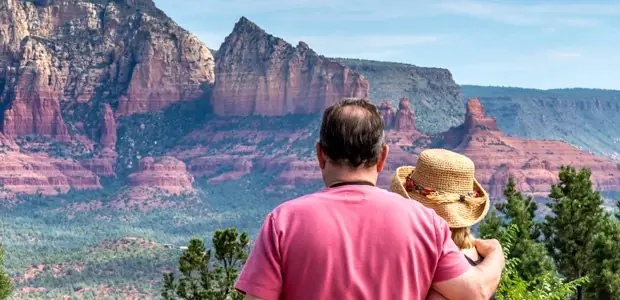
Sedona Soul Adventures was founded by Debra Stangl and offers incredible scenery and a custom-designed retreat for each couple in beautiful Sedona, Arizona. Sedona Soul Adventures’ marriage retreats (among others) emphasizes that no two couples are alike. Therefore, their retreats will typically not be configured in exactly the same way as another couple’s retreat. The focus is on healing while in a romantic haven, in which you will work in private sessions with experienced practitioners. Sedona Soul Adventures has been offering retreats since 2002 and works with more than 60 practitioners offering a range of spiritual and holistic sessions.
3. LIFE Marriage Retreats
Verified- Location
- Utah, California, North Carolina, Texas and Florida; dates vary by destination
- Format
- Small-group or private retreat
- Phone
- 877-376-7127
- Cost
- Small-group retreats cost $5,895–$6,395 per couple, depending on location. Private retreats are individually quoted and start at $14,995. See LIFE’s current pricing.
LIFE Marriage Retreats offer couples an all-inclusive experience. They get the chance to focus on their specific relationship goals and explore long-term solutions to meet their needs. For the duration of the retreat, each couple receives the following: couples’ own private bedroom and bathroom suite, gourmet meals, first-class training, private counseling, and choice of other activities. LIFE Marriage Retreats’ three-member team of professionals facilitate all small group retreats and have been successfully saving marriages for over a decade. They are committed to providing each couple with a transformative experience and sending them home with everything they need to create their ideal relationship and maintain it for the rest of their lives together. Besides their small group retreats (generally limited to four couples), LIFE Marriage Retreats also offers exclusive private retreats. Both formats include an AfterCare program. LIFE advertises retreats in Sundance, San Diego, Asheville, the Texas Hill Country and St. Augustine. Its current calendar lists September 30–October 3, 2026 in Sundance; Texas and St. Augustine have no retreat planned, and upcoming dates for the other destinations are not listed. See LIFE’s retreat calendar for the latest dates.
4. The Gottman Institute
- Location
- Orcas Island, Washington
- Format
- Two-day in-person retreat
- Cost
- The Gottmans offer a two-day in-person retreat on Orcas Island, listed at $13,000 per couple. Contact the organizer for current dates and availability. See the current retreat details and pricing.
The Gottman Institute, run by Dr. John Gottman and his wife, Dr. Julie Schwartz Gottman, offers more than 40 years of research in marriage counselling combined with 45 years of clinical work with couples, families and individuals. This professional couple understand why relationships between couples disintegrate, and they have built a set of marriage retreats that are designed to combat such relationship disintegration. Their goal is to help you identify and reach goals within the relationship, in order to strengthen couples’ bonds with each other as well as commitment to each other.
5. Retrouvaille Marriage Retreats
- Location
- Nationwide
- Format
- Weekend and follow-up program
- Cost
- Vary by location
Retrouvaille means rediscovery in French. Catholic in origin, this Christian marriage program enables attendees of any of the Retrouvaille Marriage Retreats to get the chance to rediscover each other that led to choosing marriage with each other. While many marriage retreats only last for a few days, Retrouvaille begins with a weekend, followed by a series of follow-up sessions and optional ongoing monthly support meetings. These programs are offered in areas all around the country as well as some international locations. At these retreats, couples are encouraged to focus primarily on communication. Once they learn to communicate positively and effectively, couples will have the tools that they need to move forward in a healthy way.
6. Imago Relationships
- Location
- Workshops in multiple locations
- Format
- Workshops and therapy
- Cost
- Varies by location
Imago Relationships offers couples workshops and therapy based on a program developed by Dr. Harville Hendrix and Dr. Helen LaKelly Hunt. The core of the program is founded on the concept of imago (a Latin word that refers to the unconscious image of familiar love). Since what is learned about love as a child affects intimate relationships in adulthood, these are included as issues impacting marriage relationships. During the Imago Relationships retreats, participants are encouraged to identify and explore core issues affecting their relationship. As illustrated in Dr. Hendrix’s book titled Getting the Love You Want: A Guide for Couples, learning and teaching the “Imago Dialogue”, couples are assisted through therapy sessions to move from blame and reactivity to understanding and empathy. Imago sponsors workshops all over the country, including ones directed specifically at same-sex couples.
7. Marriage Retreats with John Grey
- Location
- Online
- Format
- Private virtual retreat
- Cost
- Contact John Grey for current pricing. Private virtual retreats span three to five standard days, with six hours of sessions per day. See the current program details.
Marriage Retreats with John Grey offer more than just a place to get help with a trained psychologist. As a research psychologist and cofounder of a major research center at Stanford University, John’s evidence-based approach to helping couples is informed by current neuroscience and attachment research on what is needed for lasting satisfaction. His scientific background enables John to teach partners proven tools to overcome distress and strengthen their positive bond as a couple. (Note, you don’t have to be married to have a retreat). For the past 35 years, John has conducted intensive marriage retreats that give partners effective tools and strategies tailored to meet their specific situations and needs. He frequently works with couples in crisis and on the brink of divorce. In fact, the famous author (“Men Are from Mars, Women Are from Venus”) who shares a similar name, Dr. John Gray, included John on his preferred list of marriage counselors. Besides strengthening their interpersonal relationship, John helps couples to repair ruptures and reconnect, defuse conflict and reactive cycles, communicate effectively, heal from infidelity, overcome sexual blocks, and renew intimacy. Relationships routinely get transformed and partners take home the tools and strategies they need to stay on a positive track. John Grey’s private couples retreat is delivered virtually.
Choosing the Right Couples Retreat
Finding the right retreat may only involve reviewing the retreat’s website to understand its focus and style, in order to ascertain the one most likely to meet your needs. Besides overall reputation, you need to consider whether your values and lifestyle are in accordance with that of the retreat organizers in order to determine if that retreat is a good “fit” for you.
Prices vary by provider, format, duration and what is included. Check the provider prices listed in this guide and confirm the total directly before booking. When it comes to picking a marriage retreat, do your homework, listen to your instinct and choose the one that feels most comfortable to both of you as a couple.
See the answers to the questions below for further information to assist you in considering whether a marriage retreat is right for you.
Frequently asked questions
What is a marriage retreat?
A marriage retreat sets aside concentrated time for partners to work on their relationship through guided conversations, exercises, or counseling. The program matters more than the setting: a retreat can involve private therapy, a group workshop, or a faith-based program with peer support.
The time commitment can extend beyond a weekend. The Gottman Institute describes its Orcas Island retreat as a two-day program limited to seven couples. Retrouvaille’s Kansas City program combines a weekend with 6–12 follow-up meetings lasting two hours each, plus ongoing monthly support. Compare the hours of guided work and the follow-up schedule, as well as the number of nights away.
What is the difference between marriage retreats and couples retreats?
The names overlap; neither tells you whether a program provides therapy, relationship education, or a romantic getaway. “Couples” does not necessarily mean less serious relationship work, and “marriage” does not automatically mean a religious program.
Eligibility and the people leading the sessions are more useful distinctions. Gottman’s Art and Science of Love welcomes unmarried partners and LGBTQ couples. Retrouvaille Phoenix describes its program as peer ministry led by volunteer married couples, rather than counseling or group therapy. Ask who will work directly with you, whether they hold a current clinical license if you are seeking therapy, and whether the program addresses your concern—such as recurring conflict, lost intimacy, or rebuilding trust.
What happens at a marriage retreat?
Expect structured work on how you communicate and respond to each other, with a different balance of instruction and personal attention in each format. For example:
- Private counseling: Marriage Quest describes teaching communication skills, exploring the couple’s strengths and difficulties, and allowing individual meetings when appropriate. Each partner completes a questionnaire before the retreat.
- Skills workshops: Gottman’s two-day workshop focuses first on friendship and affection, then on conflict and communication. Couples practice privately, with therapist support available; public disclosure is not required.
- Peer-led programs: At Retrouvaille Phoenix, presentations alternate with private writing and conversation between spouses, from Friday evening through Sunday afternoon.
Request a sample schedule before booking. Check how much time involves direct work with a therapist, how much is group instruction, and what support continues after you leave.
Do marriage retreats work?
Couples therapy can improve relationship satisfaction, but that evidence does not establish a success rate for every retreat. A 2020 meta-analysis of 58 studies, representing 40 distinct samples and 2,092 couples found a large average improvement in relationship satisfaction during therapy, along with improvements in communication and emotional intimacy. Couples on waiting lists did not show a significant improvement in satisfaction.
A separate trial measured whether improvements lasted. In a 2010 study following 134 seriously distressed married couples, 50% of those assigned to integrative behavioral couple therapy and 45.9% assigned to traditional behavioral couple therapy showed clinically significant improvement five years later. These couples received approximately eight months of treatment—not a weekend retreat.
When a retreat advertises a success percentage, ask what it measures: satisfaction immediately afterward, improvement on a validated relationship questionnaire, or outcomes months later. Ask how many couples responded and whether there is published research on that particular program. General therapy research is encouraging, but it cannot promise what a specific retreat will achieve for your relationship.
How do you prepare for a marriage retreat?
Arrive with clear examples of what you want to change and enough practical arrangements in place to participate fully. A useful preparation checklist is:
- Choose two or three goals. Be specific: discussing money without shouting, sharing parenting decisions, or making time for affection gives you more to work with than “fix our marriage.” Write down a recent example of each difficulty. Use these marriage counseling questions to help identify topics you both want to discuss.
- Complete the intake separately. If the provider sends questionnaires, each partner should describe their own experience honestly. Marriage Quest’s preparation process, for example, includes a questionnaire for each spouse.
- Check fit before paying. Explain the issues you want help with, any current treatment, and whether both partners want to attend. Ask about privacy, the facilitator’s qualifications, and cancellation terms.
- Protect the session time. Arrange childcare, time off, travel, and meals. For an online program, set up a private room where you will not be interrupted.
- Plan for the return home. Reserve time to practice the exercises and confirm any follow-up appointments before you leave. Include those sessions in your calendar and budget.
How much do marriage retreats cost?
Compare the full package rather than the advertised starting price. These published examples, checked in September 2026, illustrate different formats and what their fees mean:
- A residential peer-support program: Retrouvaille of Seattle lists a $500 nonrefundable registration fee per couple and requests a further $650 donation during the weekend. That is $1,150 if you contribute the requested amount; the donation is distinct from the registration fee.
- A live online workshop: Gottman’s December 3–4, 2026 Art and Science of Love event lists a price of $799 per couple. This is an online workshop price; the Orcas Island residential retreat is a separate offering.
- Intensive private therapy: The Gottman marathon-therapy study information describes 15–20 hours of therapy costing several thousand dollars, with fees set by the therapist and travel expenses paid separately.
For your own comparison, add the program fee, lodging, meals, transportation, childcare, and any paid follow-up sessions. Confirm whether a quote is per person or per couple, how many hours of individual attention it includes, and what happens to your deposit if you cancel. A registration fee alone may not represent the full cost.